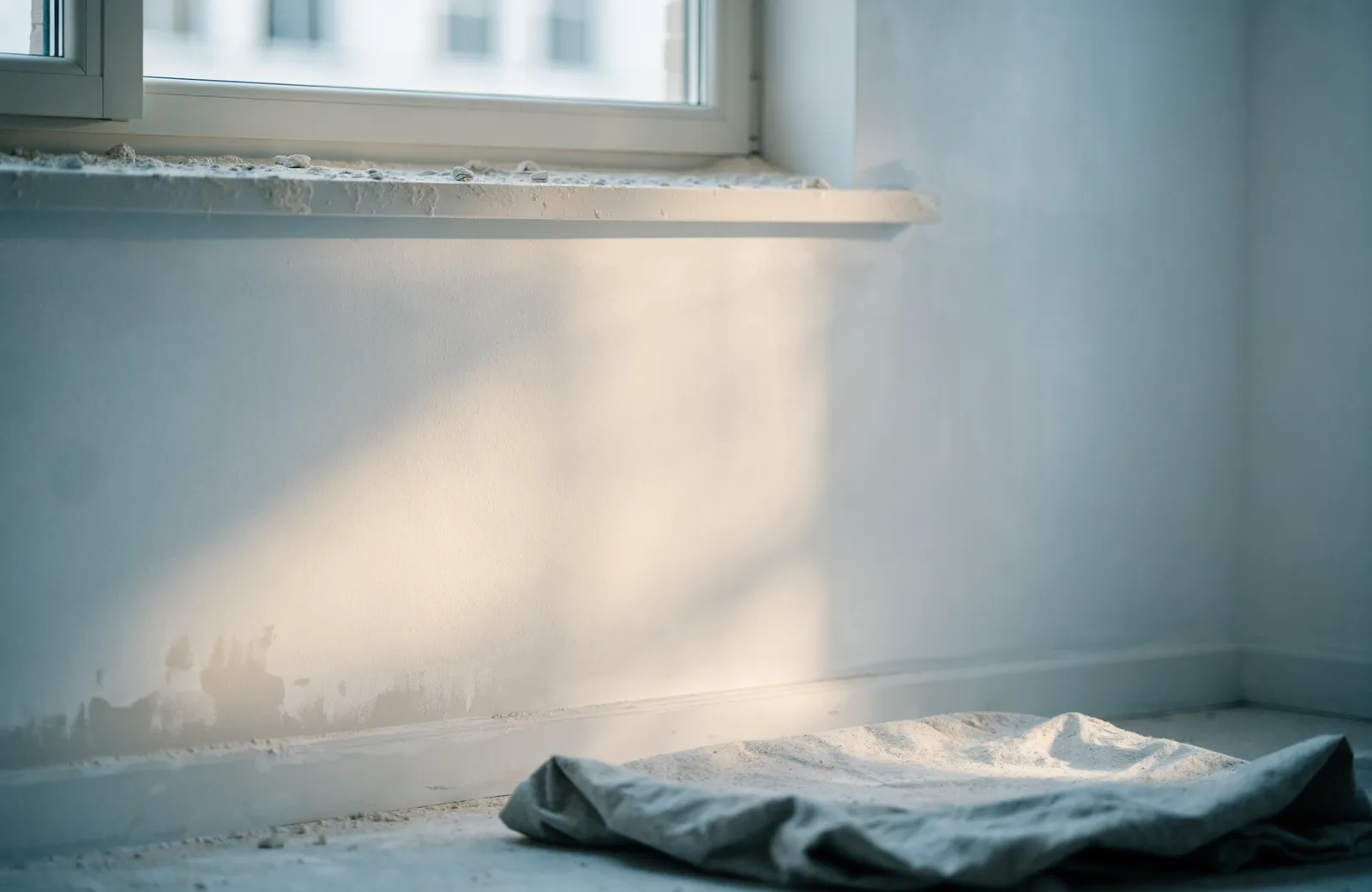
A renovation adds water to a building: plaster, screed, grout and paint all cure by releasing it. It also removes the ways the building used to lose water: old wooden windows become sealed aluminium, a ventilated void becomes a closed gypsum wall, a gap under the bathroom door becomes a flush threshold. When the two meet, the first winter after the works is when the phone rings.
The five mistakes we see most
- Gypsum board over a wet wall. A damp outside wall gets a dry-lining to hide the stain. The cavity behind it never dries, and the board's paper facing is an ideal mold substrate. The smell comes back before the paint is dry.
- Bathroom rebuilt with no extraction. The old window is now a lightwell, the fan is decorative, and the shower is a walk-in with no door. The bathroom ceiling and the adjacent bedroom wall carry the humidity.
- New windows, no ventilation plan. Sealed frames cut heating bills and cut air changes to almost nothing. Condensation appears on the coldest surface in each room, usually behind the wardrobe.
- Closing the walls before the screed is dry. A floor screed can take weeks to release its water. Sealed under new flooring and behind new skirting, it releases it into the walls instead.
- Waterproofing skipped or bridged. A shower tray without a membrane, a balcony threshold tiled over the flashing, a wet-room wall sealed only where the tiles go.
How to check a renovated flat
Do it before the last payment, not after. A post-renovation inspection reads the moisture profile of every new wall and floor with a meter, images the walls and ceilings thermally to find wet cavities and missed insulation, checks that the bathroom actually extracts (a tissue at the grille tells the truth), and takes air samples in the rooms that were rebuilt against an outdoor reference. Where a board wall sounds wrong, a borescope through a small hole beats opening it.
What the report does for the warranty conversation
A contractor who is told "the wall you closed is at 25 percent moisture and the cavity behind it has visible growth" responds differently from one who is told "there's a smell". Written findings with numbers and thermal images are what turn a dispute into a repair. We are independent of contractors and remediators, and the report is written to be handed over. In new-build and freshly renovated flats across Kfar Saba and the centre this is the most common job we do between November and February. Book it before you move the furniture in; it is far easier to measure an empty room.

Discussion
▸Comment guidelines
Be respectful. Stay on topic. No marketing or self-promotion. Spam and harassment are removed.
Sign in to comment
Visitors can read the discussion. Members can join in.
Sign in to commentNo comments yet. Be the first.