
Thermal imagingInfrared thermography reveals moisture behind walls and ceilings, problems invisible to the naked eye.
Inspection & reports
we walk it. we measure it. we write it down.
A forensic walkthrough of the whole property (air, moisture, heat and the HVAC), delivered as one audit-ready report with the plain-language answer on the first page.
- Air, at several points
- Moisture behind surfaces
- Heat through the walls
- HVAC & ducts
- Visible growth
- Structural risk
The visit
five stops, in this order.
An inspection is not a torch and a guess. It runs the same way every time, so the findings can be compared, defended and repeated.
Consultation & scheduling
We start with what you have noticed (the smell, the stain, the symptom) and book the visit around the rooms that matter.
On-site investigation
A room-by-room forensic walkthrough with thermal imaging, moisture meters and air sampling equipment.
Laboratory analysis
Samples go to accredited partner laboratories; nothing is judged by eye that can be counted instead.
Report generation
Findings, risk zones and photographic evidence become one structured document, with the answer at the top.
Expert debrief
We walk you through it in plain language: what it means, what to fix first, and what it should cost.
- 100%Of accessible areas covered
- 5+Assessment points per visit
- 5Stops from booking to debrief
What we carry
instruments, not opinions.
Every instrument on this list exists to turn something invisible into a number that can be put on a page.
Precision moisture mappingCalibrated meters map how wet a surface is, and how far the wet reaches past what you can see.
Volumetric air samplingMeasured volumes of air taken at several points, so spore levels can be compared room to room.
Photographic documentationEvery finding is photographed where it was found; the report shows its own evidence.
Risk stratificationRooms are scored rather than described, so "bad" becomes a number you can act on.
Regulatory complianceProtocols and documentation that hold up with an insurer, a court, or a buyer’s surveyor.
Afterwards
what lands on your table.
One document set, written to be read by the three people who never read the same thing: your family, your insurer and your lawyer.
- Digital assessment report: Structured, mobile-friendly, with findings, risk zones and photographic evidence.
- Risk-zone floor map: Your own floorplan, marked with where the risk is and how bad it is.
- Lab analysis results: The accredited numbers behind every claim in the report.
- Remediation roadmap: What to fix first, what can wait, and the cost range for each.
- Legal-ready documentation: Chain of custody, protocols and evidence, in the form an insurer or court expects.

Who inspects
trained and examined by InterNACHI.
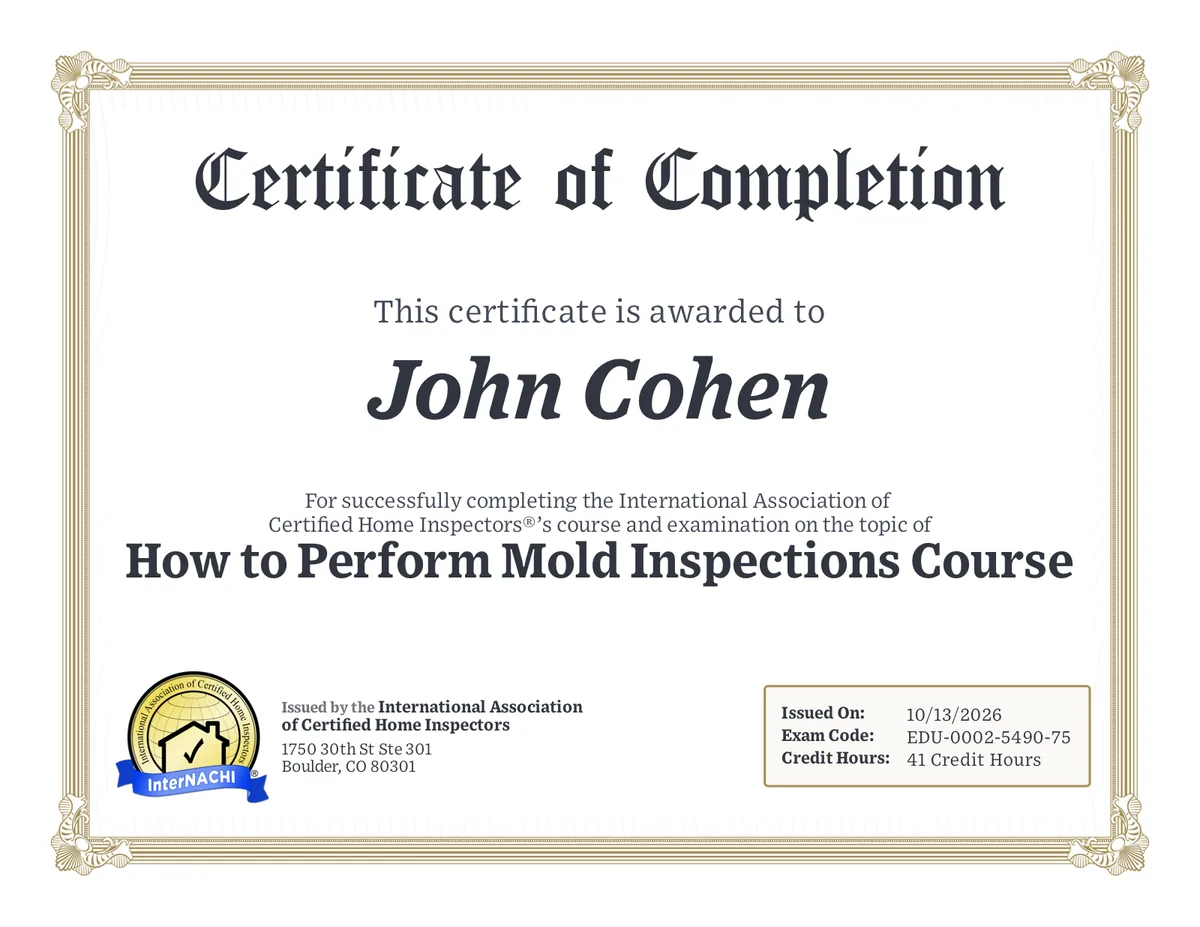
John Cohen, a CapsuLabs partner, is an InterNACHI Certified Mold Inspector. InterNACHI, the International Association of Certified Home Inspectors, trains and examines home inspectors in the United States and around the world.
- The course: How to Perform Mold Inspections, completed with InterNACHI’s exam.
- The hours: 41 credit hours of training.
- The certificate: The original, issued 13 October 2026. Open it and check it yourself.
Who books this
people who need an answer they can show someone.
- Homeowners
- Real-estate investors
- Property managers
- Health-sensitive households
Before you book
What people ask about inspections.
How long does a mold inspection take?
A visit to an average apartment takes one to two hours: a walk-through with a moisture meter and thermal camera, air samples in the suspect rooms and outdoors for comparison, and surface samples from every stain. The report follows once the lab is done, usually within 10 to 14 business days.
Do I need to prepare before the inspection?
Preferably not. Do not clean the stains, air the place out more than usual or run a dehumidifier the day before; all of that hides exactly what we come to measure. Keep windows closed for about two hours before the visit if you can, and leave access to walls behind heavy furniture.
How is an inspection different from a contractor's estimate?
A contractor sees what is visible and offers to fix it. An inspection measures: spore concentrations indoors against outdoors, the species in each surface sample, and the moisture source in the wall. Our report says what is there, how much, and where it comes from, and only then can you decide whether any renovation is needed.
Can the report be used for insurance, a landlord or a lawsuit?
Yes. It includes the sampling method, lab results for every sample, thermal images with locations, and the conclusion on the moisture source. Clients use it with insurers, contractors, landlords and neighbours, and we are available to walk anyone through it by phone.
By situation
mold testing for when it happens to you.
Cookies on this site
We store only what the site needs to work: keeping you signed in, remembering your language, and checking you're not a bot. We also run Google's advertising tag on every page, to tell which ads bring people here. Until you allow it, that tag stores nothing on your device and sends Google only a basic, cookie-free signal. Allowing all lets it use cookies too. Cookie Policy · Privacy Policy