E. coli
Direct fecal indicatorA gut bacterium. Finding it in the fill means sewage reached it, not just clean water.
Post-Sewage & Sub-Floor Bacterial Clearance · ISO 17025 accredited lab
When sewage, grey water or flood water gets under the tiles, it soaks into the sand or shumshum fill beneath them and stays there long after the floor looks dry. We take sterile samples of that fill, ship them refrigerated to a partner microbiology laboratory accredited to ISO/IEC 17025, and you get a clear answer: conforming, or active contamination that means the fill has to be sanitised or replaced.
The accreditation belongs to our partner laboratory, and it is what turns a result into evidence: a validated method, calibrated equipment and a signed laboratory report. The lab tests for three fecal indicator bacteria and reports them in CFU per gram.
A gut bacterium. Finding it in the fill means sewage reached it, not just clean water.
A broad group used as a general measure of sanitary quality. A high coliform count in the fill under a house floor says it has not returned to a clean state.
Tends to survive in wet sand and fill longer than E. coli, so it can still point to sewage after E. coli has faded.
The test fits any case where contaminated water reached under the floor, or where you need to prove it is no longer there.
A blockage in the shared line that flooded the flat through the drains, the toilet or the shower.
A cracked drain pipe, a leaking toilet connection or a waste line that leaked into the fill over time.
Water that stood on the floor and soaked through the grout and joints into the sand or shumshum.
A smell that comes back after cleaning and drying, usually along the walls and in the wet rooms.
Before you move back, before you let the flat again, or before new flooring goes down over the fill.
When the insurer, a neighbour or the building committee disputes the extent of the damage, an independent lab result settles it.
Most floors in Israel sit on a layer of sand or shumshum. It soaks up water like a sponge and holds it for weeks or months, out of reach of any dehumidifier. What to do with it is the most expensive decision of the whole restoration.
Without a test, the only safe option is to replace all the fill in every affected room. Testing area by area shows where the fill is actually contaminated, and where the floor can stay.
Contaminated fill sealed under new tiles keeps smelling. When the smell comes back, the new floor comes up again, this time at your expense.
The insurer, the contractor and the neighbour can all say the fill is fine. A bacteria count in CFU per gram on an accredited lab certificate is a number nobody argues with.
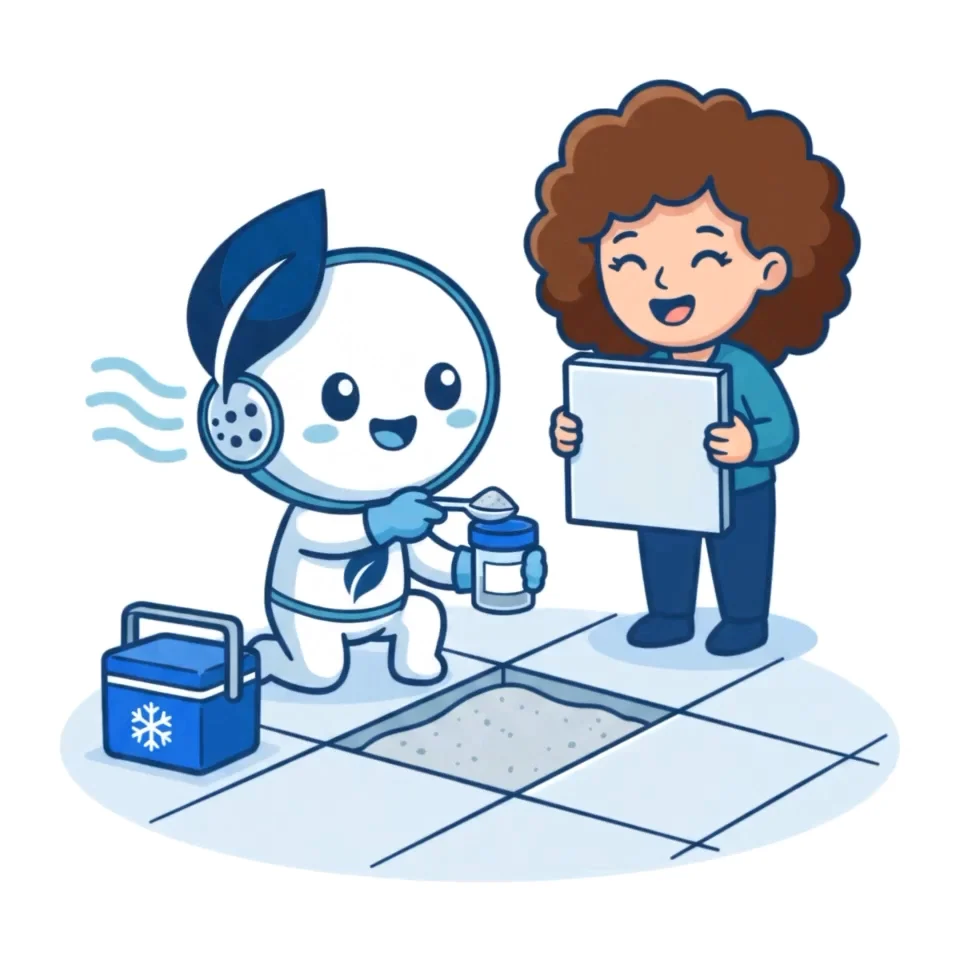
The sample is taken from the sand or shumshum itself, so every area tested needs at least one opening. You or your contractor prepare it before the visit, in one of three ways:
Under parquet it is the same: one board lifted or a section of skirting removed. Without an opening ready, no sample can be taken and the visit has to be rebooked. Tell us on the call how many areas were affected and we will tell you how many openings to prepare, and where.
The sampling visit is short. Most of the time is laboratory work, and the chain of custody keeps the result standing when someone else challenges it.
Sample 2 · shumshum under the bathroom floor
Every sampling point gets its three bacteria results and one of two conclusions, so you know exactly which fill to treat and which to leave.
The price depends on the number of areas and samples. Tell us what happened and we send you a written quote before the visit.
It measures three fecal indicator bacteria, E. coli, coliforms and Enterococcus, in samples of the sand or shumshum under the tiles or parquet. Results come in CFU per gram from our partner microbiology laboratory, accredited to ISO/IEC 17025, and the report states for every area whether the fill is conforming or actively contaminated.
Drying removes water, not bacteria. Sand and shumshum hold moisture and organic matter long after the tiles are dry, and a moisture meter cannot tell clean water from sewage. Only a lab test says whether the fill is still contaminated, and whether the floor can be closed over it.
An opening to the fill in every area tested: one tile removed, a section of skirting taken off, or an existing inspection hatch. You or your contractor prepare it before we arrive. Without an opening ready no sample can be taken, and the visit has to be rebooked. On the call we tell you how many openings are needed, and where.
Results and the sanitary report arrive within 10 business days of sampling. The samples leave refrigerated for the lab straight after the visit, and the lab certificate is attached to the report.
Yes. The testing is independent, and the report gives the location of every sample, the lab results in CFU per gram and the accredited laboratory's certificate. Clients use it with insurers, loss adjusters, contractors, neighbours and building committees to settle the extent of the damage and the scope of the works.
Yes. If you are already booking a mold inspection after water damage, the fill samples can be taken in the same visit, so moisture, mold and bacteria come back as one picture. Everything included is set out on your written quote.
The report states which fill needs sanitising or replacing and how far it extends, so the contractor works from findings rather than guesses. After the works, a clearance re-test at the same points gives you written sanitary clearance before you re-tile and move back in.
Cookies on this site
We store only what the site needs to work: keeping you signed in, remembering your language, and checking you're not a bot. We also run Google's advertising tag on every page, to tell which ads bring people here. Until you allow it, that tag stores nothing on your device and sends Google only a basic, cookie-free signal. Allowing all lets it use cookies too. Cookie Policy · Privacy Policy