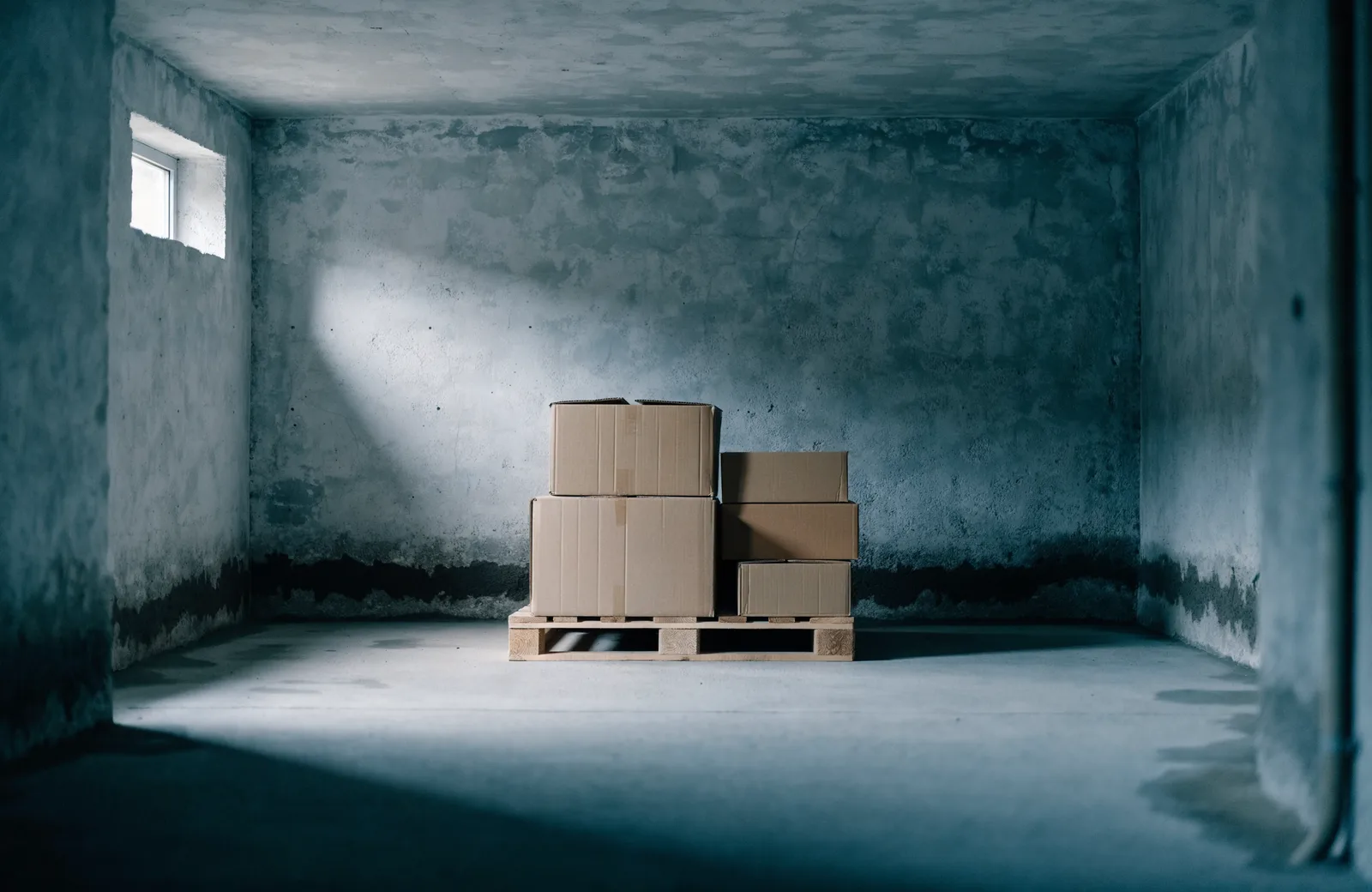
Basements in Israel were built as storage and became bedrooms, offices and playrooms. The concrete did not get the memo. A room below ground level has water pressing against it from the soil, rising through the floor slab, condensing on walls that stay at ground temperature all year, and no window to move any of it out. It is the room that mold colonises first and the one where a spray-and-paint fix lasts the shortest.
The four ways water gets in
- Rising damp: groundwater wicking up through the slab and the base of the walls. Shows as a tide mark 20 to 60 cm up the wall and salts crystallising on the surface. Common in the Sharon, where hamra soil holds water and the water table is high.
- Lateral penetration: a garden bed, an irrigation line or a downpipe discharging against the outside of the basement wall. The stain appears opposite the wet ground and gets worse after watering, not after rain.
- Condensation: summer air at 70 percent humidity meeting a wall at 19 degrees. The whole wall sweats; mold appears in the corners and behind anything stored against it.
- Leaks from above: a bathroom or kitchen on the ground floor draining into the ceiling. Usually a single, well-defined patch.
How to tell them apart
You mostly cannot, by eye. Rising damp and lateral penetration look identical from inside, and condensation can mimic both. This is the room where measurement earns its keep: a pin moisture meter gives the profile up the wall (rising damp climbs and tapers; a leak is a local peak), a thermal camera shows whether the wet area follows the ground line outside, and a humidity log over a week shows whether the room ever dries. In our inspections the basement usually takes as long as the rest of the house together.
What does not work
Anti-mold paint over a damp wall. Sealing the inside face of the wall with a waterproofing coat, which traps the water in the masonry and moves the damage next door. A small dehumidifier in a room that receives litres of water a day. Closing the door.
What does
- Move the water away outside where that is the source: redirect the irrigation, regrade the bed, extend the downpipe. Cheapest fix, most often skipped.
- Ventilate mechanically. A basement needs air exchange the building does not provide: an extractor on a humidistat, or a ducted supply from a drier room.
- Dehumidify with numbers, not hope: a unit sized to the room, set to keep relative humidity under 60 percent, with a drain rather than a bucket. What is normal humidity indoors.
- Treat rising damp properly where it is confirmed: a specialist injection or membrane, done after the diagnosis, not instead of it.
- Keep storage off the walls and off the floor. Cardboard is mold food.
If the basement is a bedroom, get the air tested before the wall gets fixed and again after. A basement in Hod HaSharon or Ra'anana that smells "like a basement" is telling you something specific. Ask for a quote and say which room it is.

Discussion
▸Comment guidelines
Be respectful. Stay on topic. No marketing or self-promotion. Spam and harassment are removed.
Sign in to comment
Visitors can read the discussion. Members can join in.
Sign in to commentNo comments yet. Be the first.