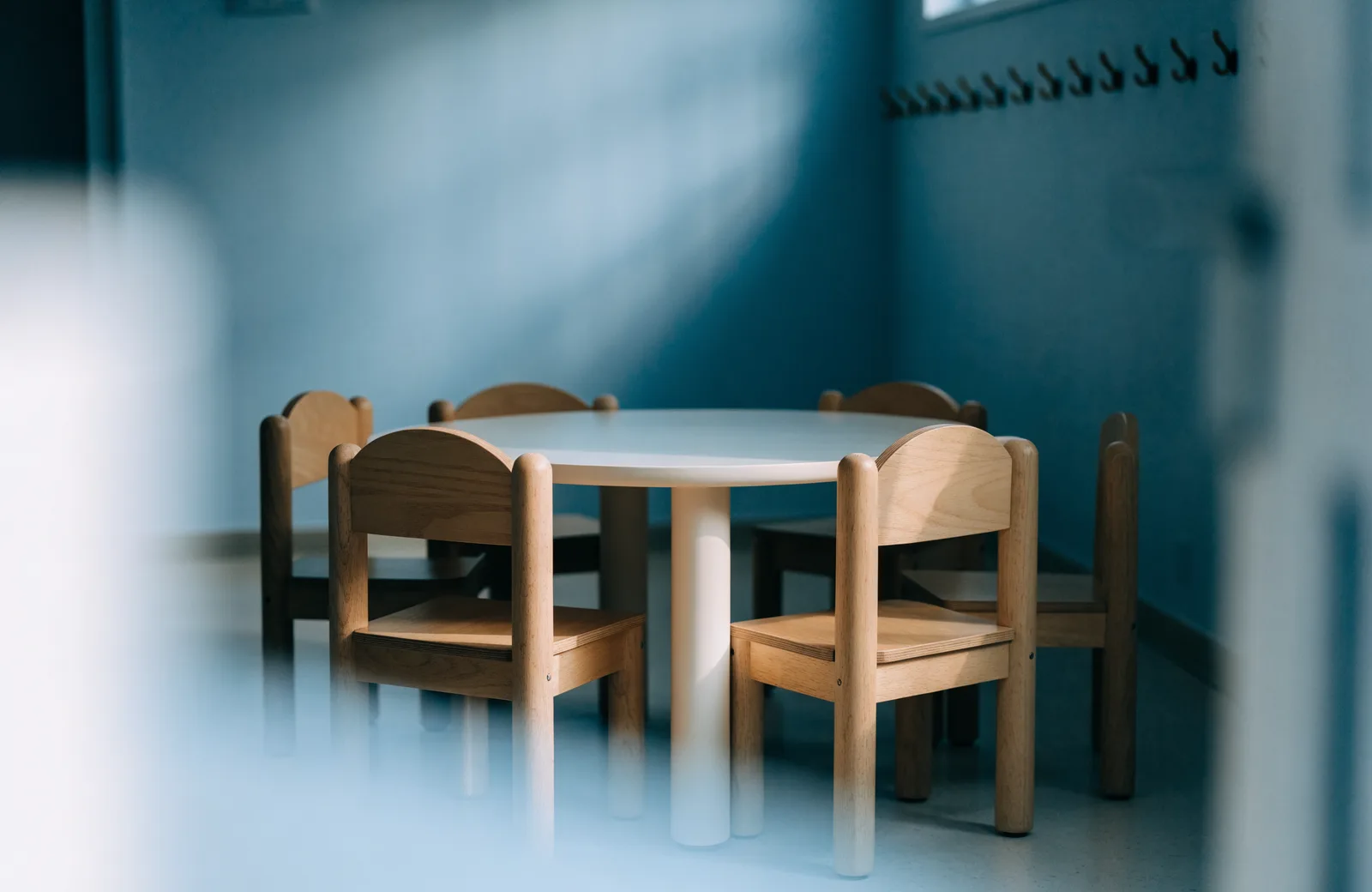
A kindergarten classroom is a small room with twenty children, a sink, a wet corner for painting, coats drying on hooks and windows that stay shut in winter. Add a flat roof or a garden bed against the outside wall and you have the conditions mold needs. Parents usually notice it in one of three ways: a smell that hits you at the door in the morning, a child whose cough clears up over the weekend, or a dark patch above the changing table.
Why children are the group that matters most
The World Health Organization's 2009 guidelines on indoor dampness and mould found sufficient evidence of a link between damp, moldy indoor spaces and respiratory symptoms, asthma development and respiratory infections. Children are more exposed than adults for a simple reason: they breathe faster relative to their body size, they play close to the floor where spores settle, and they spend most of the day in the same room. None of this means every spot is dangerous. It means the question deserves a measured answer rather than a shrug.
Where it hides in a classroom
- Behind the cubbies and coat racks on an outside wall: cold surface, wet coats, no air movement.
- Around the sink and the painting corner, especially under a laminate counter that has swollen.
- Ceiling tiles near the air-conditioning unit: a brown ring means a condensate drain that has been dripping for months.
- The nap room: mattresses stacked against a wall, curtains drawn, twenty small bodies humidifying the air every afternoon.
- Outdoor storage sheds and shelters that are closed for weeks and opened in winter.
What you can reasonably ask the institution for
Keep it factual and written. Ask when the last leak or flooding was and what was done about it. Ask whether the air-conditioning units are cleaned annually and when the filters were last changed. Ask to see the room with the furniture pulled out. And if the smell or the symptoms persist, ask for an independent inspection with laboratory samples, and for the report to be shared with parents. A municipality or a private operator is far more responsive to a parents' committee with a written request than to one angry conversation at pick-up.
What a proper check looks like
A mold inspection of a kindergarten takes one to two hours after hours. We map moisture in every outside wall with a meter and a thermal camera, take air samples in the classroom and the nap room against a reference sample outdoors, swab any visible growth, and check the air-conditioning units and the drains. Samples go to an accredited laboratory; species and concentrations come back in one to two weeks. The report gives each room a risk score, states what was found in plain language, and lists what to fix first. We do not carry out remediation, so nobody is reading a report written by the company that wants the clean-up contract.
What usually solves it
Most classroom mold is a ventilation and maintenance problem, not a disaster: a drain that needs unblocking, cubbies moved ten centimetres off the wall, windows opened for ten minutes every morning, a roof seam resealed. The report exists so the operator fixes the water source rather than painting over the stain in August. We inspect institutions across the centre of the country, Jerusalem and Haifa; talk to us if you are on a parents' committee and would like a quote to share.
Discussion
▸Comment guidelines
Be respectful. Stay on topic. No marketing or self-promotion. Spam and harassment are removed.
Sign in to comment
Visitors can read the discussion. Members can join in.
Sign in to commentNo comments yet. Be the first.